Writing as Therapy Journal - Ideas
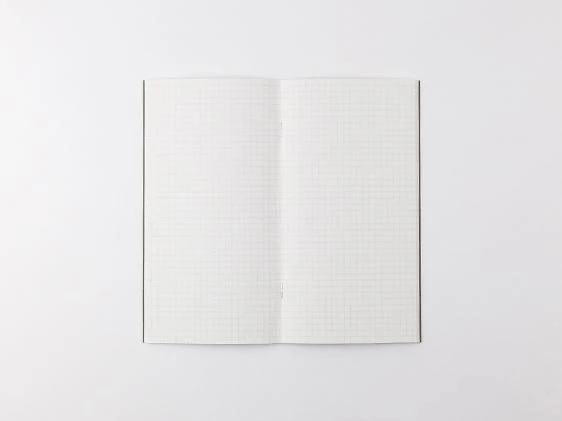
The School of Life's Writing as Therapy Journals are A5 linen-bound notebooks, featuring 192 dot gridded pages designed to accommodate ideas, aspirations and also worries in the therapeutic activity of writing down your thoughts. This journal features a bright orange linnen cover and has "Ideas" printed on the cover.
Writing as Therapy Journal - Ideas
One of the truly frustrating features of our minds is that the more interesting or pertinent our ideas happen to be, the more they have a tendency to escape our grasp.
To encourage ourselves to know our minds, a blunt demand that we should ‘think harder’ may not be the best approach. In order to give new, important ideas the best possible chance of developing, we may have to lie in wait for them with some of the patience of an astronomer. This journal provides a dedicated place to document fleeting yet significant ideas.
Details
Measures 21 x 14,8 cm
Counts 192 pages
Features an inspiring pro-logue by The School of life
Features 100grm Munken paper (acid free) with printed dot grid
The School of Life x Misc Store Amsterdam
Alain de Botton founded The School of Life in 2008. His aim was to make philosophy — long seen as the inaccessible, inauthentic stuff of academies and archives — a functional aspect of modern life. The care with which ancient philosophers thought about their lives remains a valuable antidote to the generalised anxiety of our era.
The school thus posits that ideas of Plato, Aristotle and the Stoics are as relevant to us today as they were in ancient Greece. Even if Epicurus never had social media burnout, understanding his thinking can lead us to a healthier relationship with , for example, our phones — and by extension, with one another.
We began stocking The School of Life’s series on work, gratitude and pleasure as a way of thinking through modern day issues. We admire their series for the capacity to stimulate reflection, and their ability to give a new perspective on age old problems. At its core, it is a set of strategies for finding meaning in the modern world — so that we can appreciate small pleasures and the things that might go unnoticed.
The School of Life's Writing as Therapy Journals are A5 linen-bound notebooks, featuring 192 dot gridded pages designed to accommodate ideas, aspirations and also worries in the therapeutic activity of writing down your thoughts. This journal features a bright orange linnen cover and has "Ideas" printed on the cover.
Writing as Therapy Journal - Ideas
One of the truly frustrating features of our minds is that the more interesting or pertinent our ideas happen to be, the more they have a tendency to escape our grasp.
To encourage ourselves to know our minds, a blunt demand that we should ‘think harder’ may not be the best approach. In order to give new, important ideas the best possible chance of developing, we may have to lie in wait for them with some of the patience of an astronomer. This journal provides a dedicated place to document fleeting yet significant ideas.
Details
Measures 21 x 14,8 cm
Counts 192 pages
Features an inspiring pro-logue by The School of life
Features 100grm Munken paper (acid free) with printed dot grid
The School of Life x Misc Store Amsterdam
Alain de Botton founded The School of Life in 2008. His aim was to make philosophy — long seen as the inaccessible, inauthentic stuff of academies and archives — a functional aspect of modern life. The care with which ancient philosophers thought about their lives remains a valuable antidote to the generalised anxiety of our era.
The school thus posits that ideas of Plato, Aristotle and the Stoics are as relevant to us today as they were in ancient Greece. Even if Epicurus never had social media burnout, understanding his thinking can lead us to a healthier relationship with , for example, our phones — and by extension, with one another.
We began stocking The School of Life’s series on work, gratitude and pleasure as a way of thinking through modern day issues. We admire their series for the capacity to stimulate reflection, and their ability to give a new perspective on age old problems. At its core, it is a set of strategies for finding meaning in the modern world — so that we can appreciate small pleasures and the things that might go unnoticed.
Description
The School of Life's Writing as Therapy Journals are A5 linen-bound notebooks, featuring 192 dot gridded pages designed to accommodate ideas, aspirations and also worries in the therapeutic activity of writing down your thoughts. This journal features a bright orange linnen cover and has "Ideas" printed on the cover.
Writing as Therapy Journal - Ideas
One of the truly frustrating features of our minds is that the more interesting or pertinent our ideas happen to be, the more they have a tendency to escape our grasp.
To encourage ourselves to know our minds, a blunt demand that we should ‘think harder’ may not be the best approach. In order to give new, important ideas the best possible chance of developing, we may have to lie in wait for them with some of the patience of an astronomer. This journal provides a dedicated place to document fleeting yet significant ideas.
Details
Measures 21 x 14,8 cm
Counts 192 pages
Features an inspiring pro-logue by The School of life
Features 100grm Munken paper (acid free) with printed dot grid
The School of Life x Misc Store Amsterdam
Alain de Botton founded The School of Life in 2008. His aim was to make philosophy — long seen as the inaccessible, inauthentic stuff of academies and archives — a functional aspect of modern life. The care with which ancient philosophers thought about their lives remains a valuable antidote to the generalised anxiety of our era.
The school thus posits that ideas of Plato, Aristotle and the Stoics are as relevant to us today as they were in ancient Greece. Even if Epicurus never had social media burnout, understanding his thinking can lead us to a healthier relationship with , for example, our phones — and by extension, with one another.
We began stocking The School of Life’s series on work, gratitude and pleasure as a way of thinking through modern day issues. We admire their series for the capacity to stimulate reflection, and their ability to give a new perspective on age old problems. At its core, it is a set of strategies for finding meaning in the modern world — so that we can appreciate small pleasures and the things that might go unnoticed.